
May 12 2009

Museum News


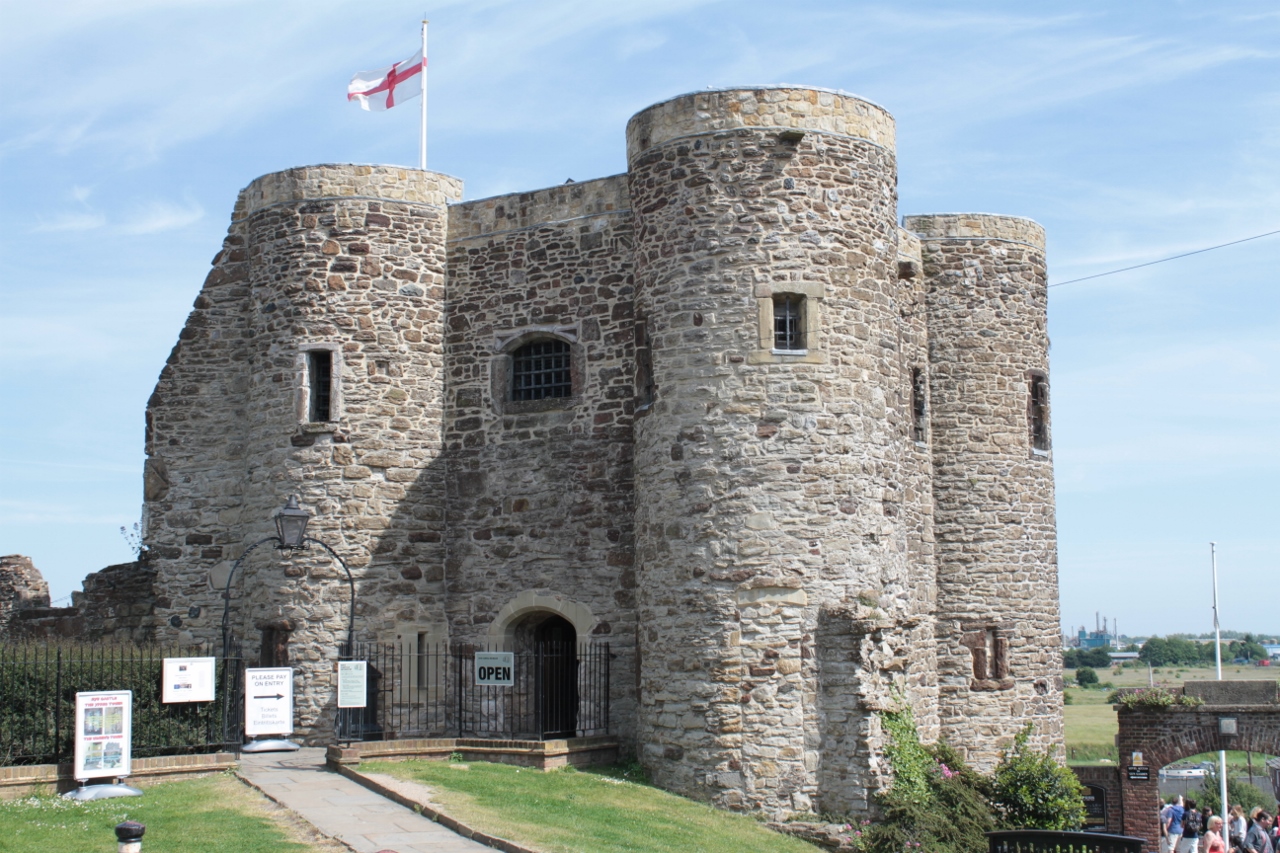
 The Ypres Tower on a summers day


Rye Castle Museum News!

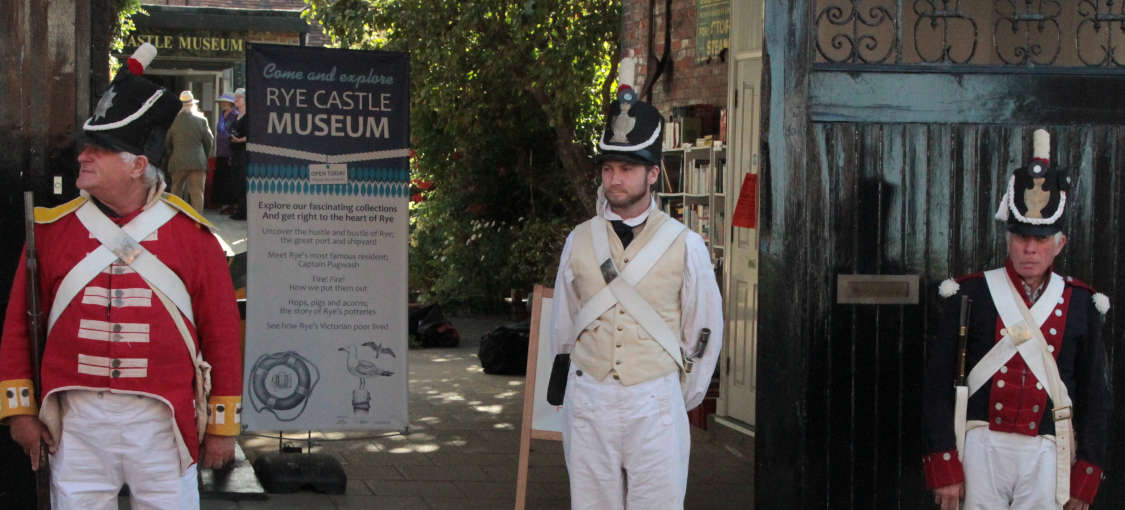
Museum opens for the new season!

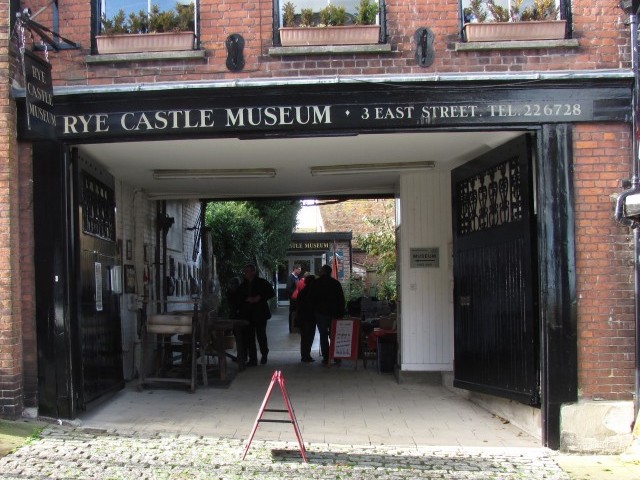
On Thursday 9th April the Museum opened for the new season. There are five new exhibitions to see at the East Street site, including a Captain Pugwash Display and Historic Documents and Seals from Mary I, Elizabeth I, Oliver Cromwell and Victoria.


The opening times for East Street are:

Monday, Thursday & Friday: 2pm - 5pm
Saturday & Sunday: 10:30am - 1pm / 2pm - 5pm

Closed on Tuesday and Wednesday

Last Admission 30 minutes before closing.

The Ypres Tower also has two brilliant new exhibitions for the season. The first is a look at Smuggling in East Sussex 14th-19th Century. The second is a monthly changing display about the Medieval Garden and Herbs.

The opening times for the Ypres Tower are:

 10.30am - 1pm/2pm - 5pm

Closed on Tuesday and Wednesday

Last admission 30 minutes before closing.


Coming Soon……….

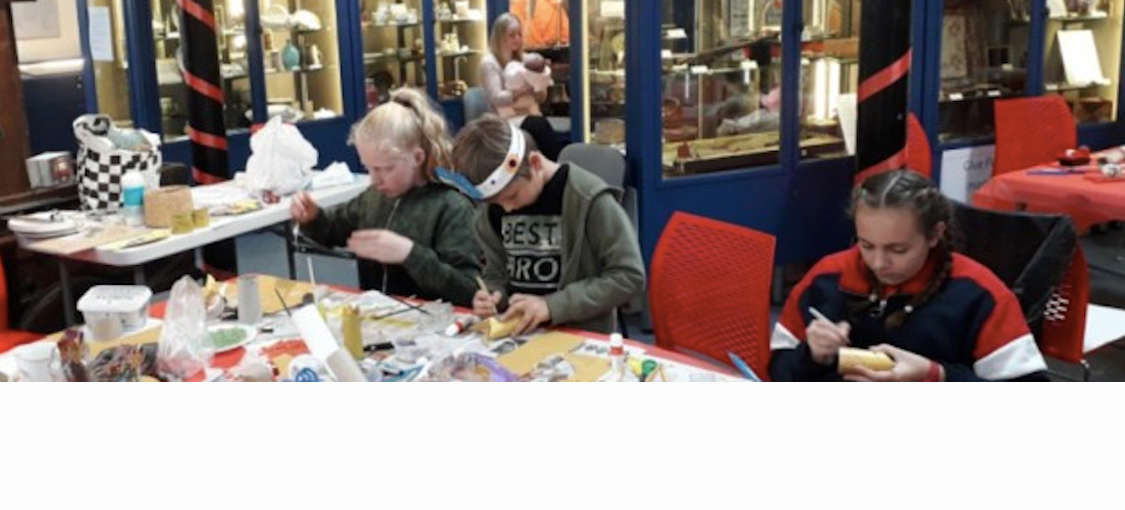
Children’s Activity Afternoons, every Wednesday throughout August 2009!
Details to follow shortly

New Talks Programme for 2009 - 2010
The talks programme page will soon be updated with our new programme for 2009-2010.


Apr 01 2009

Schools and Education in Rye


Dames School Rye 19th Century

Dames School Rye 19th Century


 Dames Schools in the 19th Century

Before the days of compulsory free education for all children, Rye had many small private schools. Here are some of them. We have memories of several, but others are just names. If anyone can help with more details of any of them, please let us know.

Mrs Albin’s School - in Watchbell Street, later in Cinque Ports Street.

Miss Allen’s School - Watchbell Street

Miss Ashenden’s Dame School - Wish St. and Rope Walk.

The Bellmount School (Mr Pretty) - Watchbell Street.

The Misses Bushby’s School - Sussex House, first in the Congregational Hall (now the

Community Centre), then in West Street and later Turkeycock Lane/Tower St.

Mrs Colebrooke’s School.

Miss Cook’s School.

Miss Frankham’s School.

Miss Fryman’s School.

Mrs Goddard’s Adventure School.

The Misses Greenaway’s School in Watchbell Street, later in Cadborough Farmhouse.

Mrs Horner’s School in Sheffield Place, off Lion Street at the back of the George Hotel.

Miss James’ School - Wish Street.

Mrs Kinnett’s School in Watchbell Street and Turkeycock Lane.

Miss Landry’s School.

Miss Pink’s School in Mermaid Street, Watchbell Street, later East Street.

Mrs Seliman’s School in Watchbell Street, later Cinque Ports Street.

Miss Stonham’s School.

Mrs Williams’ School.

The School for pauper children, which was run “by the Parish”, in the South Chancel of St. Mary’s Church was “moved” elsewhere in 1862/3 when the Church was reorganised and the closed off chancels re-opened..

In the 20th Century there were also the Rye Collegiate School on Guys’/Hilder’s Cliff, sometimes called the Misses Moon’s School’, and The Convent School in Bank House, High Street (where Woolworth’s now stands).

Mrs Longley wrote these recollections in the 1950’s:

“Rye has been noted for many things throughout its long history, but during the 19th Century it appears to have been quite a centre of learning.

In 1840, when a coach left the George Hotel daily at 8 am (Sunday excepted) for London, and when our population was 4,893, in addition to the
Grammar School and Sanders’ Charity School in Landgate, (Bedford Place) there were five privately owned day or boarding schools in the town, some of them described as Academies.

Watchbell Street and Mermaid Street were, apparently, the most favoured by these select abodes of learning - but how different these two delightful and serene streets of our present town must have been then. Straw-hat makers, milliners
and dressmakers, greengrocers and sweet shops, and public houses, were found in both. The Hope & Anchor at one end of Watchbell Street was
very handy for sailors from the Strand Quay, and I am told that a Mrs Knight of this Inn was famous for the making of home-made sweets which she was so bold as to sell on Sundays! The Jolly Sailor at the other end of the street did a
roaring trade and had a well-known doss-house attached to it. In my young school days, we hurried by this Inn of ill repute with averted eyes, in fear of drunken sailors reeling in the street.

Of the schools before 1840 I know very little, but in an old directory of that year there was listed a school in Watchbell Street, its principal being Miss Charlotte Allen. Miss Allen’s establishment would be for the instruction of the very young: progress through the local schools is shown in a fragment of autobiography by Walter Fuller
Thorpe, ” the first school I attended was kept by Miss Allen. I left there in 1845 (aged 5 years 6 months). The second school, from which I was removed at
Christmas 1848, was kept by Miss Pink. I then went to Rye Grammar School, Mr George Easton, Master. I was there for five years ……”

Miss Pink’s School was kept by two sisters, Jane and Eleanor. It has come down in history as ‘the Misses Pink’s Academy’. It was situated in Mermaid Street and as a ‘Ladies Boarding and Day School’ was a popular school for many years. Here is the
Prospectus, which must have been issued in their heyday, for there is a great difference between the tone of this dignified statement and that of the latter days of their school when it was in Cannon House, East Street where. I am told, they had 21
scholars and as many cats.

The Prospectus of the Misses Pink’s Academy
THE MISSES PINK’S ESTABLISHMENT
FOR YOUNG LADIES
MERMAID STREET, RYE.

Terms per Annum.

Board, and Instruction in English Grammar,
Geography, Ancient & Modem History, Plain &
Ornamental Needlework, Writing, and
Arithmetic, TWENTY GUINEAS

Weekly Boarder, SEVENTEEN GUINEAS

Washing, TWO GUINEAS

Each lady shall bring a silver dessert spoon, knife and fork, and six towels.

A quarters notice or payment is required previous to the removal of a pupil.

Terms per Quarter

Day Pupils, ONE GUINEA AND A HALF.
French, TEN SHILLINGS AND SIXPENCE.
Music and drawing, FIFTEEN SHILLINGS EACH.

Wax Flowers, TWO SHILLINGS AND SIX-
PENCE PER LESSON.

Day pupils and Instruction in English Grammar, Geography, Ancient and Modern History, Plain and Ornamental Needlework, TEN SHILLINGS
AND SIXPENCE

Writing and Arithmetic, SEVEN SHILLINGS AND SIXPENCE.

What is now 44, Church Square - then in Watchbell Street, next door to the pawn shop, was a Dame School for many years.

In about 1884, another, very small Dame School was held by Mrs Horner, grandmother of Councillor Horner. An ‘Old boy’ has told me that
the children sat on low forms and repeated the alphabet and the mathematical table by the hour, and he has never forgotten his 2 to 12 times table.

The chief point of interest about this little school is that it was situated in a ‘hidden’ part of Rye, -a part that many never see. The school was reached through a narrow passage from Lion Street, (then Red Lion Street), which led to the back premises of Dennis’s Ironmonger’s Shop, whose front entrance is in the High Street. However, behind the Ironmongers, there still stand two little houses - two rooms up and two rooms down (now the store-rooms) - with a narrow cobbled passage between them not more than 3′ 6″ wide - the two front doors being exactly opposite each other.

A few feet further on are two more little houses which once faced Lion Street with a passage between them, but now they and the passage have been incorporated into Mr Herbert Gasson’s Antique Galleries. Just above the Galleries on Lion Street there is a doorway, but it no longer gives public entry to what was, in the 1880’s, Mrs Horner’s Dame School.

However, education in Rye was progressing rapidly by that time. In the 1870’s Public Elementary Schools were built. Organised teaching was the order of
the day - with some rewards for hard work and there was a report that: “about 50 of the most deserving boys attending Rye Board School visited the Indian and Colonial Exhibition in charge of Mr J.M.Jenkins, head-master, expenses being defrayed by public subscription.” That was on August 20th 1886.

The following year, Jubilee Year - the Mayor (Mr C. S. Vidler) gave a treat and a day’s outing to ten Grammar School boys and forty Board School boys at Lydd and Dungeness as a “Jubilee Holiday”.

Not only the pupils but also the teachers were on a firmer footing. In November 1886, it was decided at a meeting of Rye and District teachers to form a branch of the National Union of Teachers. In July the following year they had their first summer outing to Bodiam.

One discordant note of the 1880’s occurred when, in March 1882, on Mr Chapman’s resignation as master of the Workhouse, the Guardians decided to send the children to public elementary schools.It is on record that for many years the youngsters trudged to and from Playden School as Rye did not receive them.

Some children went to Cadborough House School ( the old Cadborough Farm
House, since destroyed by a flying bomb.) The Principals were Misses Sophie and Annie Greenaway. Miss Sophie was tall and gaunt and had a glass eye, which gave her a sinister look. Miss Annie was small and pretty with fluffy brown hair and eyes as bright as a robin’s. Their father was a typical old sea captain with a frill of white beard from ear to ear, piercing blue eyes, and a happy smile, but few teeth. He carved little
models of coasting barges for the boys. ( taken from the memories of Tom Longley )

Other stories of these Rye Schools are recorded in the Rye Memories ‘Schools in Rye’ volume produced by the Local History Group of Thomas Peacocke Community College in 1989.

There follows reminiscences from various Rye residents:

1. Herbert William Wright. b. 1879

 There were four schools in Watchbell Street: Miss Pink’s; Miss Greenaway’s, Mrs. Seliman’s and Miss Albins’ (Mr. Hobb’s niece).
The first school I went to was Miss Albin’s in Hobb’s Pawn Shop. It just had one class. In those days we had no desks, only stools. The cane was used a lot. I remember a girl called Maudy Washbourne was always in trouble and she used to run away. The teacher could do nothing with her.

Another thing that sticks out in my memory is my brother Moss (Amos). I took him to that
school ( Miss Albin’s ) for the first time. He would not go in. There was me and Miss Albin pulling him in. Miss Russell, who had a shop opposite, came over and filled his mouth with sweets, but we never succeeded in getting him into school.

Another school I went to was Mrs. Kinnett’s School. It was a mixed school run by Mrs. Kinnett and her daughter and we had to pay 2d a week. There was no free schooling in those days.

I remember we had no desks, but we had to sit on boxes on each side of the room. The sanitary arrangements were very bad - we had to walk up the garden! Mrs. Kinnett was a very old lady - her lunch as brought to her every morning - brandy and natty fingers with bread! We had to stand by her table and read by pointing our finger on the letter. If we made a mistake she used to jab her needle into our finger, as she would be
darning stockings!

We had one afternoon of knitting and all the boys had to learn how to crochet.
There was no playtime. The Congregational Chapel was next door and there was a cherry
apple tree in the garden, which we used to sample!

After school Mrs. Kennett’s daughter used to take us for a walk and we had to pick up all the sheep wool to put in the old lady’s ear. Our mother and father were at this school too!

I was there in 1887 when it was Queen Victoria’s Jubilee. All schools marched to the salts to receive a three-penny piece and a medal -I still have mine. Mr. Vidler was Mayor of Rye.

2. From members of The Rye Women’s
Institute in 1956

The Misses Greenway’s School was noted for the politeness of its scholars. For instance the slate rag was kept in the comer of the room, and the pupils would line up with the gracious ritual: ‘After you with the rag, please Willie,’ to be fol-
lowed, on receiving it, with grateful thanks, and occasionally a sly kick. Is it to be wondered at that, after this surfeit of politeness, the boys, released form school, would go over to the Tan Houses to listen to the fishermen swear? Without cinemas, radio or television, we were forced to make our own amusements. They might seem tame to the children today, but to us they brought excitement and the pleasure of contrast. To be in the open air after the stuffy, over- crowded schoolroom was a delight, even though we still wore our black woollen stockings, button boots, numerous petticoats and starched dresses that pricked the neck. (Pinafores, oblig-
atory wear for school, were left behind: so too were thoughts of pothooks and hangers, the recitation of multiplication tables and the needlework lessons when we mended our own or our teacher’s clothes.”

3. Mr. Richard Baker

The first school I attended was a tiny private one, run by an elderly Mrs. Seliman in a small house (now demolished), in Cinque Ports Street. The fee charged was 6d per week (2.5 p now). I remember that our class, perhaps 10 or 12 pupils, was situated in a back room on the first floor, overlooking the Market and the Railway
Station, and on one occasion I was rewarded, presumably for some good work, by being allowed to sit idly watching the trains. Mrs. Seliman had probably been told I was madly in love with railways; indeed, for several years I had every intention of becoming a train driver until the day I read, in “The Boys’ Own
Paper”, that it might take 20 years to pass through the various stages of training, where- upon I dropped the idea for ever!

4. Mrs. Edith Hill (Nee Baker)

I began school at four years of age at a Dame School belonging to Mrs. Seliman. It was in Cinque Ports Street, in a row of cottages. It was knocked down by a bomb when the Cinema went. We sat on forms in what had been a bedroom and wrote
on slates. My brother went first and I wanted to go with him. Eventually my mother let me go.

5. Mr. Ken Ellis

My first school, at 4.5, was a Dame School run by Miss Seliman and her brother. It was situated in a row of cottages where the new shops are on Cinque Ports Street. (The cinema was built on the demolished cottage site first.) About twenty youngsters sat on wooden forms and wrote with slate and slate pencil.

6. Miss Molly Kimpton

I began School at Miss Seliman’s School in Cinque Ports Street. We had to go past a dairy to get to it. The lane we used to go to Miss Seliman’s was also used by Mr. Ashbee’s cows to go to their milking sheds at the bottom of the lane. At school we went through a side gate and up into a dark hole -it seemed jet black -up a
staircase to get to the schoolroom. Miss Seliman was a little shrivelled old lady who wore a boned collar to her black blouse and a black skirt. She always smelled of paraffin! She had little glasses and I don’t think she could smile. We wrote there on slates and I remember the Ellis children being there when I was. If you had to go to the toilet, you had to go down the dark staircase and across a cobbled yard.

7. Miss Elia Harvey

At the age of six, I was sent to the Sussex House School, a private school run by the Misses M.E. and C.A. Bushby, daughters of the Postmaster. For our premises we used the Congregational Sunday School Rooms on the Lower Floor (now adjacent to the Community Centre on Conduit Hill). They consisted of two rooms and an outside toilet. The Senior Class was taken by the elder Miss Bushby, while the younger sister
taught the Juniors, and a third teacher was engaged for the youngest pupils. The teachers wore blouses and skirts. Our lessons embraced the three ‘R’s’, and draw-
ing and music were extra subjects then after school hours. We assembled at 9.30 am until 12noon, and 2 pm until 4 pm. We had no uniform but later on we adopted red tammies with a school badge. We had no playground, so limited exercises were taken with dumbbells, Swedish Drill and marching to music. Homework was set. As our numbers increased, the Misses Bushby built a house in West Street, near to Tower
House, and there we had an Upper and a Lower Room with cloakroom and W.C. indoors. We also rented a room in Church Square to take surplus pupils. Some years later we moved yet again into larger rooms in Tower Street. They were originally the
Ceramic Stores and well adapted for our needs as we grew in numbers, including a few young boys. Here we extended our subjects and included algebra. We still had no playground, but rented a tennis court on the Cricket Salts, near to the Pavilion. No school meals were provided as we were all local children and went home for a mid-day meal. Each year we produced an operetta, which was
performed on the Monastery stage, and a display of handwork and painting in our schoolroom. During the last three years of my schooldays, a visiting dancing teacher was engaged, and we were taught bailet, national dances and ballroom dancing.

8. D.G.Southerden

I went to school at Sussex House School in West Street, run by the Miss Bushby’s. It was on the left hand side. at the top, just before the turning towards the Church. The ladies did not live in the house, they lived in Church Square. I was there until Miss Clara died and Miss Queenie gave up the School. My schoolmates there were Jim and
Reg Burton: their mother had a newsagents shop in the Mint. I recall dancing
the Maypole on the Salts at George V’s Coronation when at this school.

9. Mr Raymond Balcomb

I began school at the age of five, in 1912. I attended the Sussex House School in West Street. My earliest memory, indeed the only one of that school, is of two boys more robust than myself, attempting to bully me into parting with my lunch and once being sent to school on a pouring wet and windy morning with an umbrella. It blew inside out and I was so relieved to get home.
10. Miss Nora Booth

I began school in a little private school in Wish Street.
11. Mrs Joan Page

I went to Miss James’s School next to the Pipemaker’s Arms until I was five.

QUOTES

“Girls away - because they were not allowed to knit!” [An early strike?]

“Water in tap unfit for drinking -begged from the neighbours.”

“Spent all my time this week working with the dunces of different classes round the blackboard.”

“Mistress to special service in church for women.”

“in spite of big fires no room above 31′F at 9 am and 37′ F at noon and 3.45pm.” Happy Days!


by Jo Kirkham


Mar 10 2009

Smuggling


Bee KeeperSmuggling is known to have existed in the Rye area since the 13th Century, when Edward I introduced the Customs system.

The earliest references to smuggling are a warrant in 1301 to search for wool, hides, bales and all other merchandise and persons attempting to export money or silver.

In 1357 an Admiralty inquest was held at Rye before the deputy Lord Warden of the Cinque Ports to collect evidence against Simon Portier and several other men for exporting uncustomed wool from the port of Pevensey.

From the late 1550’s smuggling became much more worthwhile with the introduction of a revised customs tariff and a new series of impositions. Further restrictions on trade, by Customs and also Excise Duties, introduced in the 17th century made many common utilities such as candles and beer very expensive.

By the end of the 17th century social conditions encouraged the expansion of smuggling into a widespread occupation affecting many of the residents of Kent and Sussex. Living conditions became harder, unemployment increased and smuggling offered an alternative to poverty.

Many smugglers wore a bee-skep, in which eye and mouth-holes had been cut. Such a disguise was an offence, so much so that anyone having his face blackened, masked or otherwise disguised when smuggling contraband goods could be adjudged of felony and sentenced to death.

Restrictions on the export of English wool, first in 1614 and subsequently increased by the late 17th century, imposed to protect the cloth industry had made wool smuggling into a major trade.

This was known locally as the ’Owling’ trade. The coastal areas around Rye where the wool was produced were so near to France that even the threat of death was no great deterrent.

The Owling trade expanded into the import of luxury goods from the Continent. Silks, tea, tobacco and brandy were profitable items to bring in to evade the heavy duties imposed by the Government.

The "Free Traders"Smugglers became large, highly organised and heavily armed groups, based either in convenient landing places on the coast, like Rye, Hastings, Pevensey and Bexhill or strategically placed villages on the roads to London and the interior, like Brede and Bamber. Long before the end of the 17th century import smuggling was so great that the Government was in danger of losing control of the situation.


By 1700 Riding Officers were appointed, stationed along the coast to control the illegal export of wool. An officer had to provide his own horse to patrol an area of coast at night. He was paid £25 a year plus an allowance for his horse.

His job was to listen to rumours, keep a low profile and write a daily record of all he saw. It was not a popular service but continued until after 1850.

Other ‘preventive’ services trying to outwit the smugglers were Customs House Officers, responsible for legal trade, and Excise Officers, whose duty was to collect taxes on manufactured goods later extended to various other imported goods.

Customs OfficerIn addition to the land based officers there was a small fleet of Revenue vessels, cutters and luggers, used to patrol the sea. They were too few to be really effective against larger smuggling boats.
 

From the 18th century to the early 19th century there were many smugglers in the Rye area. The most notorious and formidable gang was the Hawkhurst Gang. They used the Mermaid Inn, Mermaid Street, Rye as one of their bases terrorising the area of Kent and Sussex and no one dared to interfere with their activities. Its members did not hesitate to torture or murder anyone who opposed their operations.

The gang was finally defeated in 1747 by the Goudhurst Militia and its members executed in 1749. Rye smugglers were very successful in evading the law since there is little evidence of their being brought to trial. However the Ypres Tower, Rye, used as a prison, is known to have housed smugglers.

A smuggler’s Signaling Lamp (on display in the museum) was found in a hidden room at Iden. The light container was held in the crook of the left arm while the right hand, placed over the end of the light-emitting ’spout’, signaled the message. The single candle’s light inside the lantern could be seen as a pinpoint of light well out to sea.

 In 1821 the National Coastguard Service was introduced. This evolved into a disciplined and uniformed body, with shore based patrols, a rowing guard offshore and men on the Revenue cutters patrolling the sea.

Coastguard cottages were built at regular points round the coast to house the officers. In the war against smuggling the initiative had passed from the smuggler.
 

The most important factor in the suppression of smuggling was the enormous reduction and abolition of most of the duties as part of the policy of Free Trade in the first half of the 19th Century. With the wholesale reform of the Customs service in 1853, which ensured a loyal and efficient force, the picture is completed. Smuggling, thereafter, was relatively unimportant. The Coastguards remained, but their work became more of a sea rescue and life saving service.
The Surprise


Feb 14 2009

The Invasion Coast


 Pre Roman Times.
This area was one which received many tribes from the ”continent” in Pre- Historic times.

 Paleolithic
(Old Stone Age) hunters walked across the land-link, which existed where the English Channel now is, and left stone tools and hand axes.
During the MESOLITHIC (Middle Stone Age) period, the Ice Sheets began to melt and there was serious flooding - forning the North Sea and English Channel.

Neolithic
(New Stone Age) times saw different tribes come across the sea from what is now Northern France and Belgium and bringing a ‘revolution’ in life style, having developed farming as a way to 1ive, as opposed to just surviving by hunting and gathering as had previous visitors. More detailed evidence remains from about 3000BC, when two streams of culture met on the chalk downs of Sussex, one from the south-west, the ‘civilised’ Mediterranean world, and which has been named MEGALITHIC culture, and the other from the east, the outer edge of NEOLITHIC Europe. The latter came in across ‘our’ coastline.

Subsequently individual peoples can be identified - BEAKER FOLK about 1900 BC and WESSEX tribes about 1600 BC - named, in the first case, by their special burials in ’beakers’ and the latter by their skills in designing and trading. A flint ‘factory’ has recently been discovered at Iden.

The Bronze Age is named for the times when the people had learned the skills of metal working - about 700 BC.

Iron Age folk came in waves between 500 and 50BC and many of these have been called CELTIC peoples. There is now some dispute as to whether there was a distinct Celtic ‘tribe’ or a group of similar peoples. Britain entered the ‘full Iron Age’ in mid first century BC when the BELGAE tribe came from the lower Rhineland.

In our area there was a vigorous and technically well advanced ironmaking industry in existence, based on the Wadhurst Clay Ridge, above Hastings, which had iron ore and timber for charcoa1. Ingots were shipped out by small estuarine ports on the Brede and the Rother, to other parts of the Belgic south-east - coastwise to the Chichester-Fishbourne area, or to Kent, and across the Channel to Gaul.

Other items exported to mainland Europe from our area were hunting dogs and slaves.
Our district, around the mouth of the Rother, was the border zone between the tribes of the CANTII (or Cantiaci) and the ATREBATES.

Roman Times

In 55 BC Julius Caesar left Boulogne for Britain as, he said,
‘it would be a great advantage to have visited the island, to have seen what kind of people the inhabitants were, and to have learned something about the country with its harbours and landing places.’ He arrived at Dover, but faced with antagonistic tribesman, he sailed on and landed further north with the help of his friend and ally Commenius. Bad weather and the onset of winter forced him to return to Gaul, but he had more ships built and returned in the summer of 54 BC.

The probable result of these two visits was agreement between some tribes and Rome and these arrangements led to increased trade. Caesar records that there was IRON production in the maritime region of Britain – based on Wealden iron ore, timber for charcoal and clay for the kilns being available. There was a great impetus given to iron production during the years that followed these visits, before the Roman Invasion.

Indeed, it has been suggested that the existence of this iron industry, and the wish to own and control it, was one of the main reasons for this Roman Invasion.
In 43 AD, the Romans began to bring the country complete1y under Roman control, when the Emperor Claudius sent an army which landed at Richborough. The invasion army is described as being in three sections and it has been interpreted that these were divided between Richborough, Dover and Port Lemanis (facing what is now Romney Marsh). After the passage of the Legions further North and West, this region, the land of the Cantiaci, with its capital at Canterbury, became a core area for Roman control of Britain.

The Wealden ironmaking areas were ‘nationalised’ by the Romans very soon after the invasion. According to the latest research, they made it an imperial estate, controlled by Classis Britannica (the Roman Fleet), for over 250 years. There is much evidence of Roman ironworks in many local villages - Brede-Broad Oak, Icklesham, Beckley, Peasmarsh etc. At Beauport Park, outside Hastings, part of a Roman bath-house built as a part of an iron-making complex, has been discovered and excavated, although the settlement which must have accompanied it, has not yet been found.

The products from these works were sent along several Roman roads, built on the ridges, which linked the works. (Part of one of these was excavated at Icklesham some years ago.) The iron was then exported from the ports on the Rother and Brede rivers and estuaries. A very important Roman port throughout the Roman period was called Portus Lemanis – now near Lympne – Stuttfall Castle.

The forts of the Saxon Shore, were a series of fortified harbours or garrisons which the Romans either developed from older ports or as entirely new foundations, in order to give protection from the ‘SAXON’ group of tribes which were making regular piratical raids on the south of Britain. A list of 428 AD gives the names of 10 of them, and the system had been in place at least 100 years by then, under the command of the ‘Count of the Saxon Shore’. Professor Fuentes believes that ‘Riduna,’ half way between Portus Lemanis (Port Lymme) and Anderida (Pevensey), was Rye, and has some textual evidence for this.
Rome appears to have accepted that Britain was no longer part of the Roman Empire after c.410 AD.

The Dark Ages

By the mid 5th century, the mercenaries and their families brought in by the Romans to bolster the defence of Britain late in the previous century, when the Legions were being withdrawn, had been joined by further waves of Germanic immigrants.

Some were invited by the British to help them in their defence, while others came seeking new land to settle. Many of them came into Britain across our coast. Vortigern, who ruled Kent, brought in Saxons under two chieftains of the Jutes, Hengist and Horsa (the first Saxons whose names are recorded). Initially Briton and Saxon seem to have existed peacefully - living in the same settlements and inter-married.

Inevitably, as more and more Saxons arrived in the late 5th century, the Saxon demands for land bred resentment in the British. Between 450 and 600 AD there were frequent battles along our coast with many British defeats as they did not co-ordinate resistance, except for a short period when an ‘Arthur’ was in charge. The border between Kent Jutish and Jutish Sussex was approximately along the line of the River Rother - i.e. it was already, by 550 AD, a political and cultural border. The next phase was when the newly established Anglo-Saxon kingdoms fought for predominance.

In 798 AD the Anglo-Saxon Chronicle says - ‘Cenwolf, king of Mercia ravaged the Kentish people and the people of Romney Marsh; their king, Praen, was taken, and they led him bound to Mercia, and had his eyes put out and his hands cut off.’

Danish and Viking

By the 8th Century there had been no significant invasions from abroad for 200 years. The sudden appearance of the Vikings in 793 AD, attacking Lindisfarne was a violent shock. They and their longships from northern lands, which the Anglo-Saxons called ”the force”, attacked the English shores, beginning in earnest in 835 AD. The harassment was as the form of hit and run raids: a landing was made, villages pillaged, the local armies fought and defeated, and the raiders left with their plunder. They stayed for a few weeks and seldom went more than 15 miles inland. Many of these attacks were across ‘our coast’. The Anglo-Saxon Chronicle says that in 841 AD - ‘Ealdorman Herebryht was killed by heathen men, and many of the people of Romney Marsh with him’

In 851 AD they first ‘wintered’ here. The word ‘Viking’ is a generic term for Scandinavians -inhabitants of what is now Sweden, Norway, and Denmark.
Danes predominated in the raids on southern England.
The ’Burghal Hidage’ is a document dating from the late 9th century. It lists 33 sites in Wessex and English Mercia fortified by Alfred as part of his campaign against the Danes. The list goes round the defensive ’burghs’ in order in his kingdom. It begins with EORPEBURNAM. So far unidentified, this settlement is in Sussex, east of Hastings and is probably Rye. It had a defensive line of 445.5 yards and a later survey of Rye’s town walls and ditch, recorded in 1847, gives the distance as 445.5 yards!!

King Alfred (871-899) halted the decline of the English, by organising armed opposition on land and he had ships built to attack at sea.

In 892, ” the great force…went … from Boulogne, and there got ships, so that in one trip they set out with horses and all, then came up the mouth of the Lympne (Rother) with 250 ships. This rivermouth is in east Kent at the east end of the great wood we call Andred, the Weald… The river we have spoken of runs out of these woods, and on the river they took their ships four miles from the outward mouth, and there broke into a fort; in the stronghold there were only a few peasants staying, and it was half-built. ” (Anglo-Saxon Chronicle.)

It goes on to say they built a fort at Appledore and they continued to harry the land for many years - indeed throughout the 10th Century.

In 978 AD King Ethelred came to the throne - but he was weak and had to pay larger and larger sums of tribute money to King Harold of Denmark - a strong king who had united the Viking lands – and his successor King Swein. From 992 AD the Vikings invaded almost every year until 1014, gaining more and more land and influence. Swein even took over the throne of England for a few weeks before his death in 1014. Ethelred came back from exile in 1014. After his death in 1016 his son Edmund took the throne. Swein’s son Cnut (Canute) succeeded Edmund, when he died seven months after his accession.

King Cnut married Ethelred’s Norman widow, Queen Emma, and fulfilled her late husband’s vow to give ‘our area’ – known as the Manor of Rameslie – to the Abbey of Fécamp in Normandy. This had great implications, as this Abbey was the favourite Abbey of the Duke of Normandy. From 1012 the kings had had the use of ships paid for from taxation. These were augmented by ships from what became known as ‘The Cinque Ports’ - Sandwich, Dover, Romney, Hythe and Hastings - when required. For a while our coastline had a peaceful time - as one of the main routes into England from the continent.

A series of Danish kings followed, to be succeeded by King Edward the Confessor in 1045. However, Godwine, Earl of Kent and Wessex, really ran the country. After a rift with Godwine, in which Godwine refused to attack his own people in the Dover area, Edward banished Godwine’s family (1051-2) and brought Norman’s into high government positions, thus antagonising the English.

Godwine fought back and returning from exile, he tried to regain his position along ‘our coast.’ He came from Bruges ‘with his ships …. and put out to sea one day before midsummer eve, so that he came to Dungeness, which is south of Romney. Then it came to the knowledge of the earls at Sandwich and they went out after the ships and called out the land forces. During this Earl Godwin was warned and turned to Pevensey; the weather became so violent that the earls could not tell what had become of Earl Godwine.’ (Anglo-Saxon Chronicle)

On hearing that the king’s ships had dispersed, Godwine returned to his friends in the Cinque Ports area of the south-eastern ports and joined up with their ships and seamen.

At the same time, Godwine’s son, Earl ‘Harold was on his way from Ireland with nine ships ‘. He met up with his father off the Isle of Wight and ‘Took what had been left behind, and went from there to Pevensey. They took as many ships as were serviceable, so continued to Dungeness, look all the ships that were in Romney, Hythe and Folkestone, then turned east to Dover, went up and seized as many ships and hostages as they would, and fared to Sandwich. There they did the same.’ (Anglo-Saxon Chronicle)

Godwine and Harold regained power with the support of the people in our area and they drove out many of Edward’s Norman advisors. In return for Norman support, Edward had apparently promised England’s crown to his great-nephew William of Normandy in 105l, but after Godwine’s death (1053) Edward relied heavily on Harold, who was also his brother in law. The dying monarch allegedly named Harold his successor.
The Rye area was still owned by the Abbey of Fécamp.

Norman Times

King Edward the Confessor died on 5 January 1066 and Harold was crowned King on 6 January 1066. William the Conqueror landed at Pevensey with 400 large and 1000 small ships on 28th September 1066. This area of coast between Rye - Hastings and inland to include Brede (the Manor of Rameslie), was a good place to land as it already belonged to the Norman Abbey of Fécamp and was relatively safe for ‘William’.

Harold was in York fighting an invasion by Harold Hardrada of Norway and his own exiled younger brother Tostig. The ships from Hastings, Romney, Hythe, Dover, Sandwich and several smaller ports, were accompanying his army and were in the North Sea.
After Harold’s successful battle against the Danes at Stamford Bridge outside York, on 24 September, he forced-marched his troops south on hearing of William’s landing on 1 October. He sent his ships south also, to block off William’s escape route to Normandy. It was a monk of Fecamp who carried William’s challenge to Harold and the reply to which resulted in the Battle of Hastings at Senlac Ridge on October 14 1066.

After his defeat of Harold, William then went through ‘Norman-owned’ lands of ‘Rameslie’ to Romney where he proceeded to slaughter the populace. One of his ships had accidentally landed too far East and the Romney people had dealt harshly with the crew. This served as a great warning to Dover, for the custodians of the Castle there handed it to him without a fight. William then went on to Canterbury and London where he was crowned King of England on Christmas Day 1066.

Medieval Times

For the next 200 years, until 1247, our coast, including Rye, became one of the most important routeways to the ‘French’ parts of the kingdom - Normandy, Aquitaine and Gascony. Winchelsea and Rye were the northern arm of the wine trade from Gascony. The Channel was an Anglo- Norman stretch of water.

The CINQUE PORTS rose to great power at this time. They were the key to any sea travel by the monarch - both to trade or to go to war, and ships from Rye and Winchelsea went to fight against Ireland, Scotland, France, Spain and the Low Countries. They also went ‘on Crusade’ against the Infidel - in Spain and in the Holy Land. One third of the monarch’s ships came from the Cinque Ports. They were the professional nucleus of his navy.

THIRTEENTH CENTURY
The 13th century was known as ‘The Violent Century’. It became impossible to keep these superb seamen of the Cinque Ports in check - violence, quarrels, piracy and wrecking on the high seas, have all been laid at their door! They occupied their ‘off’ duty time by preying on much traffic in the Channel and dealing in a lucrative ‘ransome’ business.
The loss of Normandy in 1204 made the problem worse, because the former allies were now enemies! The friendly ‘lake’ with the same Monarch all round its shores now had opponents on each side! The Channel became a moat of defence, which the ‘Ports’ defended. Many privileges were given to the Cinque Ports Towns, including Rye, at this time, in return for their support.

1213 Rye ships were in the fleet which destroyed Dieppe and French ships in the Seine.

1213 Later in the same year they helped to defeat the French at the Battle of Damme. 200 French ships were captured.

1216 The Cinque Ports Fleet (including Rye ships) relieved the siege of Dover Castle and defeated the French. The Fleets met in the Channel at the Battle of Sandwich. This removed the threat of a French invasion for several years.

1217-35 Cinque Ports piracy in which Rye’s ships took a very full part.

1235 Portsmen seized and plundered French ships when not at war - and threw the crews overboard!

1242 Henry III failed to defeat France. He ordered Portsmen to attack the French coast very successfully until the French ports, unusually, united to retaliate.

1243 Anglo-French truce.

In 1247 Rye, which had been owned by the French/Norman Abbey of Fécamp, was taken back into English ownership by Henry III, for, as the French and English were at war, it was inconvenient, to say the least, to have part of England owned by the enemy. (Fécamp Abbey was given lands further away from the coast in compensation.)

In 1249 the King, Henry III, as part of the defence against these raids, gave permission for the building of a castle in Rye.

This is the building which is part of RYE CASTLE MUSEUM!

1258-65 The ‘Barons War’ involved many land and sea attacks and The Portsmen supported Simon de Montfort (Henry III’s brother in law) who had rebelled. 28 of them served as representatives from the Towns, in his Parliament – the very first one.

1260 During Henry III’s reign: first known general Charter of the Cinque Ports was issued.

1264 The Portsmen’s ships were worn out in the conflict and Simon de Montfort showed his approval of the Ports actions by levying a tax of 1/10th on the Church to pay for new ships for them to continue patrolling the Channel for him

1278 First known detailed joint Charter issued by the King to the seven Head Ports.

1282 Portsmen joined the King on his Welsh expedition and captured Anglesey.

1290 Portsmen joined the King on his Scottish expedition. Both these expeditions were difficult, as they were also keeping the Channel patrols, as well as fishing, and going on trading voyages and defending the Ports.

1293 Portsmen defied the King in order to try and settle the problems in the Channel. The Irish, Dutch, and Gascon ships joined the Portsmen against the Normans, Genoese and Flemish in the Battle of Mahe, when the Portsmen won decisively.

1294 The next 150 years saw war with France and the King appointed a Captain of the Ports, so that he could ensure control of them.

1295 The first Admiral of the Cinque Ports, Gervaise Alard of Winchelsea, was probably appointed as ”Captain and Admiral of the Cinque Ports Fleet”.

1297 The King led a campaign against the French at Swyn and, within his Fleet, the Portsrnen attacked the Yarmouth men, destroying 20 of their ships and killing many of their crews. They were kept apart after this!

1299 Portsmen attacked Scotland with King Edward I and this war went on to the next century.

FOURTEENTH CENTURY
The animosity between the French and English also continued into the 14th Century.

1308 The Ports’ ships conveyed King Edward II and his Court to France for his marriage to French Princess Isabella in Boulogne.

1310 Inquiry into Ports’ piracy against Flanders.

1323 Scottish campaigns ended and France allied with Scotland - balance of power for the Portsmen changed.

1325 Queen and Court carried to France by Portsmen - this actually led to civil war and the murder of King Edward II in 1327.

1329 saw the first of a series of murage grants for the building of walls and a ditch for Rye; with three large gates,- of which the Landgate is the only one left.

As part of The Hundred Years War (1337-1453), many mutual raids involving burning and pillaging took place; the danger of invasion was ever present and the Ports bore brunt of attack. The Portsmen could be relied upon to fight to the death and to massacre the crews of the French ‘quicker than it takes to eat a biscuit’. However, they could not be relied upon to make careful discrimination between friend or foe!

1337-39 French Fleets improved dramatically and now the small ships of the Ports had to be joined by large ships from elsewhere to fight them. The Ports themselves were attacked by the French - this included the following ports of Hastings, Rye, Folkestone, Winchelsea, Dover, Romney and Hythe.

1340 The Portsmen assembled a small fleet of 21 small ships to retaliate, with 9 from the Thames. They beat off French ships attacking Rye and Hastings and chased them to Boulogne causing great damage. 70 more English ships, with King Edward III, then arrived and the main French Fleet was defeated in the Battle of Sluys.
This action began a change in sea warfare tactics, from small raids to large sea battles. The small Ports’ ships with crews of 20/21 men and limited days of Sea Service, became only a part of larger forces in future.

1346 Rye ships ferried over men, horses and supplies for the Battle of Crecy.

1347  The siege of Calais had 700 ships fighting, but only a quarter were Portsmen. The vital role of The Ports’ ships then became surprise raids, repelling and chasing pirates and raiding parties,

1348/9 The Black Death - ‘That time fell great dethe of men in all the worlde wyde’.

1350 Edward III and the Black Prince fought the Spanish in Rye Bay with 50 ‘good ships and pinnaces’ against 40 much larger ones. 14 Spanish ships were sunk and the rest fled. The Queen watched from Udimore.

1350-1356 Seven French raids against Winchelsea.

Many tit for tat raids occurred across the Channel e.g..

1377 Rye destroyed by the French five days after Richard II came to the throne. Only the four stone buildings of the Church, the Monastery, the Rye Castle and the Friars of the Sack, were left standing within the town.

1378 Rye and Winchelsea retaliated and burned French towns. They found the stolen church bells and one of them was not returned to the Church, but erected at the end of Watchbell Street, to be rung in warning if the town was attacked.

1385 Bodiam Castle was built on the Rother as part of the coastal defences.

1394 Rye men involved in transporting King Richard II and his men to Ireland.

1396 Rye men involved in transporting the King and his men to Calais.

FIFTEENTH CENTURY
1405 Rye ships and men went to Wales with Henry IV to help put down the rebellion of Owain Glyndower.
Rye ships continued to carry men, horses, supplies etc. to the English armies fighting on the Continent when the the Hundred Years’ War continued, after Henry V revived it, upon his accession to the throne in 1413.

1415 Rye ships ferried troops and supplies to Agincourt.

1416 Portsmen, including Rye’s, were called out by Henry V to defend Calais. He had made piracy high treason.

1422 They transported Henry V’s body back to England from France.

1449 Tenterden became a Corporate Limb of Rye in the Cinque Ports after years of association.

1453 England lost all its possessions in France, except Calais - the end of ‘The Hundred Years War’.

1453-1558 Rye’s ships continued to provide vital supplies to Calais.

1459 The ‘Wars of the Roses’ began.
Henry VI’s wife, Margaret of Anjou, gained the support of France (and Scotland) for the Red Rose side, and the possibility of invasion was present, until Edward IV secured truces with both countries in 1463.

Edward’s sister Margaret married Charles of Burgundy, who was based in the Low Countries and much trade was secured between the two places - especially for cloth and wool and large quantities went out through Rye. France looked enviously at this trade and there was an uneasy peace along the Channel coast.

The French again supported Margaret when she and Warwick (The Kingmaker, who had changed his allegiance to HenryVI) invaded and took back the throne in 1470. The ‘Readeption’ of Henry VI only lasted a few months, as Burgundy came out on the side of Edward IV of York, and he was back on the throne in 1471.

1475 Edward IV assembled a huge army to invade France – estimated to be 30,000 to join the Duke of Burgundy, 10,000 to go to Normany and 6,000 for Gascony, The Calais contingent actually got to France - they were transported across our coast. The King eventually made a Treaty and got huge pension form the King of France - for not fighting!
Trade then flourished across our coast.

Tudor Times

1488 Henry VII’s largest warship, ‘The Regent’, built at Reding Street near Tenterden, was fitted out in Rye and went into service in 1491. Many other ships were built along the Rother and at Rye itself - ships for the Crown were built from at least 1410 to the 1550’s.

1489-90 Town ditch scoured, walls repaired, fences covered with thorns were built, cliff’s steepened and a ‘sege hous’ was built to defend the Strand. At this period when large guns were rare, Rye had a least three.

1491 Henry VII and his army taken to fight in France by Portsmen.

1491-3 Rye paid a third of its entire town expenditure on war preparations during this time.

1495 Rye was regarded as a potential landing point for Perkin Warbeck as he had some supporters in the town. Five men were found guilty of treason and hung, drawn and quartered.

SIXTEENTH CENTURY
(I am indebted to Dr Graham Mayhew, as much of this information is from his study of the Rye Records. J. K.) In Tudor Times, the traditional Cinque Ports Service of troop carrying was not as important as it had been previously, but it still went on, as well as, at times, empressment for soldiers. But the greatest wartime expense in the Town Records until the 1580’s was of maintaining the town walls, town ditch, building barriers, barricades, booms in the harbour and the placing and maintaining of the guns.

Much of the expenditure was found by a tax levied on French prisoners taken by privateers operating out of the town, and the value of goods seized e.g. in 1549/50. 10 captains captured 226 prisoners; 1557/8 32 captains took 465 prisoners.

The Camber was the main refuge for shipping - (it is said up to 300/400 ships could anchor in safety here) - for the whole of the eastern English Channel. The sea could still surround the town to a depth of 20-30 feet at some tides, except for the narrow stretch of land from the Landgate – and the inhabitants were really worried about the danger of enemy ships getting near the town. More guns were bought and about 10 or 11 were ready to defend the town. Some of these were stored in the Castle.

1512-14 Camber Castle was begun by Henry VIII to defend against the French as well as repairs being made to the town defences.

1513 Rye (with Dover) was the chief embarkation port for Henry VIII and his army being taken to France to fight in the Battle of the Spurs - The Regent was lost. Rye had been ordered to send 6 soldiers by the Lord Warden, as well as ‘Ship Service’.
1513 May: A Cinque Ports Court met and ‘Every man that goeth in the navy of the Portes shal have a cote of white cotyn with a red cross and the armes of the Portes undernethe that is to say the halfe lyon and the half shippe’.

1520 ‘The Field of the Cloth of Gold’. Rye ships were among those which escorted Henry VIII across the Channel to meet Francis I of France. Sir Edward Guldeford was Lord Warden and Marshal of Calais and had to organise the supplies for the month long event.

1522-3 War with France again and Rye was ordered to send 12 soldiers. Rye again had to make expensive preparations and repairs to the town fortifications. There were great guns on the Strand, on the Landgate and on a platform on the cliff. There is the first reference to a paid gunner in the town.

1531 Cinque Ports ‘Ship Service’ was demanded.

1539-1542 Henry VIII completed his Castles built to guard the coast nearest to the Continent and closest to London - Sandown, Deal, Walmer, Sandgate and Camber, with alterations to Dover. 1272 men were employed in these works at Camber.

1540 A Captain and 25 soldiers were garrisoned at Camber by the end of 1540. Its men and armour were similar to those in Dover and Portsmouth - showing its importance.

1544 Rye was again the main embarkation point for Henry VIII’s troops to France for the Boulogne expedition and the town had to send 20 soldiers as well as provide ‘Ship Service’ of 3 ships.

The invasion scares and this expedition again cost the town a lot of money, as it made expensive preparations with new town defences. These were much more ambitious than those of 1491, 1513 and 1522. Royal Commissioners took charge and more than 47 men (including 12 masons) were employed making the walls fit to hold ordnance, developing the Gungarden and the new ”fortresse” at the Strand which involved demolishing old shops. The work was urgent as they worked all night and on Sundays too, and used French prisoners-of-war.

1545 French galleys (”Galleys and Franche shippes”) appeared off Rye and the people, and soldiers, rushed to defend it. Extra bows, arrows, pikes, arquebuses and shot were bought in the fo11owing years and eventually the north aisle of the Church was taken over as an arms store. The town even owned suits of armour.

1556 Mary I demanded ‘Ship Service’ and 2 Rye fishing boats were employed to watch the French coast.

1557-8 Mary I’s war with France needed great defence preparations as well as its men and ships being used again. 80 of its mariners were ‘pressed’ for the Queen’s ships, as well as 2 ships being demanded for Cinque Ports service, (called here - ‘dolling’). The Mayor spent time in prison in London because he refused to levy more taxes on Rye people for the war at this time.
A new jetty was built at Budgwell and covered with thorns; Landgate was narrowed and defended; 18 masons were employed on the wall and 51 men were employed digging out the ditch; new portcullises were installed in Land and Strandgate. Men had the job of making hail shot.

1558 Mary I lost Calais: many Rye ships and men became redundant and had to find other trade.

1562 Rye was once more the main departure point for troops, this time for those of Elizabeth I’s Le Havre expedition to France, when she intervened in the religious wars there.

The expense was made worse when Elizabeth refused to make a general licence for privateers at this time, from which Rye had raised much of its money. However the town had a large arsenal of weaponry.
We had an ‘invasion’ of 1500 religious refugees from this time.

1577-1580 At least one sailor from Rye, accompanying Sir Francis Drake, completed the second ever circumnavigation of the world.

1585-88 Camber Castle had further modifications to take the larger guns needed to defend against the Spanish threat.

1588 Rye ships and men were part of Queen Elizabeth I’s fleet which fought the Spanish Armada.
One plan of the Duc de Guise was to land troops from France and Flanders in the Camber.
Among the fleet of five ships and a pinnace was the ‘Towne Shippe of Warre of Rye’, the ’William’, 60 tons. Under the control of Lord Henry Seymour, they took a full part in the fire-ships attack and subsequent dispersal of the Spanish Fleet off Calais.

Once again the town fortifications were improved - at great expense. These included cutting 240 tons of timber to restore the platform at the Gungarden: maintaining the great guns there and at Land and Strandgate; and rebuild the bridge over the ditch at the Postern Gate. At every ‘scare’ great attention was given to water supply of the townsfolk.

A permanent gunner was now employed by the town and there was a ‘gun house’. Rye was ordered to buy muskets by the Cinque Ports, to increase the number of light weapons available.

1589 Rye was chosen as the rendezvous for ships from London, Dover and Portsmouth for transporting the English troops sent to Dieppe to help Henry IV of France. The town was ordered to provide 3 ships, but eventually 2 served.

1596 The Cinque Ports allocation to the Queen’s fleet for the Cadiz expedition was again five ships and a pinnace; ‘The Hercules of Rye’ 100 tons was one of them. Rye was the embarkation point for all of Sussex’s troops.

1597 A list of weapons in private hands is written in the Muster Rolls of 1597/8. It shows that bows and arrows have practically disappeared - but, in order of amount, the townsfolk had calivers, muskets, pikes, bills, swords, halberds and daggers. They possessed armour - skulls, Spanish murrions, corselets, caps, cuirasses, caps and headpieces.

During the last decade of the century, Elizabeth was trying to get the Cinque Ports included into the shire defences.

Stuart Times

1603 The town walls were intact, except on the east side where the river and cliffs replaced the lost part of the wall. The battery at the Gungarden and the bulwark on the Strand still had some guns and the Watchbell was kept in good repair. Camber Castle was still garrisoned.

1625 War was declared on Spain and Charles I attacked Cadiz.

1626 War was declared on France and Rye was put on alert again. It still paid one gunner. Rye ships captured at least one French ship and took prisoners.

1643 Camber Castle was abandoned. The Mayor and Jurats of Rye were given £200 from the monies made from the sale of lead from the Castle, to use on the defences of the town.

1650-59 The Commonwealth: The Civil War did not affect Rye directly as the Corporation had been controlled by the Puritans since 1631, but they had to billet Parliamentarian troops on many occasions.

During the Commonwealth there was very strict control over travellers going to and from the town, by land and sea, and reasons for movement had to be sent to the Clerk to the Council in Whitehall. The Royal party had a naval force under Prince Rupert and these ships patrolled the Channel from 1648, before the death of King Charles I. One Rye ship was captured by them. This opposition ended in 1552.

1652 - 54 1st Dutch War: There were a great many skirmishes between the Dutch fleet and the Commonwealth Navy, under the command of Admiral Blake, including one off Dungeness. Ships and men from Rye were in the navy. Troops were stationed in the town.

1655: The Town Council petitioned The Lord Protector, Oliver Cromwell, for Rye’s ships to be allowed a convoy system.

1657 Two Companies of foot soldiers from Col. Robert Gibbon’s Regiment were quartered in Rye.

1658 These soldiers were eventually sent to Dunkirk and the Mayor was instructed to enlist townsmen and set watches for the defence of the town. He did have 120 men on patrol, but soldiers were still billeted on the town.

1659 A party of the County Horse and 100 foot from Kent were sent to the town under Captain Heath.

1660 The Restoration of the Monarchy - Charles II.

1662 The Mayor applied to the Tower of London for some gunpowder saying that the town had more great guns mounted than any other of the ports with the exception of Dover. But they were having difficulty in finding money for the ammunition. They needed it for ”ornament upon festival and other public occasions, for the stopping of vessels, which might otherwise steal out of the harbour without paying their dues; for keeping the peace when foreign ships of war, with their prizes, were in the harbour together, and the safety of the town.’

1664 - 67 In the Second Dutch War and the Third Dutch War: 1672-74. Rye was put on alert, but no fighting took place here, after the Four Days Battle in the eastern Channel. The fleets sailed past on many occasions and Dutch privateers did prowl the coast, however. The French were supposed to be our ally in this Third War, and when they didn’t give the support expected, they once more became our ‘rival’. The ‘peace’ virtually prohibited imports from Northern France and so inaugurated a long period of smuggling across the channel for brandy, silks and linens.

1688 The 2 fleets involved in the Glorious Revolution sailed down the Channel - that of William Prince of Orange, sailing on behalf of his wife, Mary, passed Rye on Nov. 3 and that representing James II followed it on Nov. 4th.

1689 32 men and a boy were sent to Chatham on the King’s service to man the King’s ships. 1690: The war with the French was renewed and a weakened navy (most ships were away on other duties) was defending the south coast against the threat of invasion by a very strong French navy.

The great town gates and the postern gate were repaired and turnpikes were made to stop horses going through them - unless with permission. The 3 guns at the castle point were brought into the fort and the gun lying at the Gungarden Rocks was brought up the hill. Sufficient tamkins and aprons were provided to preserve the guns; planks were put under the wheels and the carriage of the great gun in the fort was mended.

1690 The warship ‘Anne’ was beached off Pett Level after fighting the French in the Battle of Beachy Head on 30 June and is still there in the sand. The crew were paid off in Rye. The great ‘Scare’ had mobilised the town for a possible invasion.

1691-2 Nominally the English had the control of the Channel but French privateers attacked ships and threatened places on the south coast. Rye was on the alert. This situation went on throughout Queen Anne’s reign - until 1713.

EIGHTEENTH CENTURY
1739
A new war was begun, this time against Spain and eventually, France joined in on Spain’s side. Rye, once more, was on the alert.

1741 A platform was raised on the Bowling Green, then in the Gungarden; 8 guns were placed there, and the town bought 2 barrels of gun-powder and built a store in which to put it.

1743 There was a French plan to invade England across the Channel. French troops and transports, together with the Young Pretender to the throne of Britain, assembled at Dunkirk in 1744, which the British Navy then blockaded. The French Brest Fleet were to support the army invasion, but the British Navy faced them at Dungeness. A February gale stopped the French and they retreated without battle. The town presented a loyal Address to his Majesty the King, at the failure of the French attempt at invasion - ‘who fled terrified by the Approach of your Royal Navy and only night and tempest gave them opportunity of escape.’

1745 There was another invasion threat when the Young Pretender invaded England from Scotland. The French navy was reluctant to get bottled up in the narrow eastern end of the Channel with a British navy behind it, and so it failed again to support the land forces in their crossing. There was a few days of rea1 threat of invasion and Rye was prepared once more. 1756-63: The Seven Years War: In the Channel there were the usual features of privateering and alarms of invasion.

1759 Again there was a direct threat of French invasion, but this time further down the Channel coast than Rye. However, Pitt the Elder, called out the Militias to defend the realm and had reserve regiments of regular soldiers camped out along the south coast. Dunkirk was blockaded again and the ships in Le Havre were attacked. In November, as the fleet sent to escort the invading troops which were assembled at Quiberon, left Brest, it was attacked and was then defeated by the British. The invasion was abandoned once more.

1766 There was a period of peace and a section of wall to the east of the Postern Gate was taken down to allow carriages to enter the town that way. The arch over the Strandgate was also removed and the stones from both of these were given to the Churchwardens to build the Churchyard walls. A little while later, the Postern Gate was repaired.

1778 A new war broke out, when France declared war in support of the Americans. The Channel was again an important scene of action and the Battle of Ushant was indecisive - mainly because of the neglected state of our Navy.

1779 The Spanish joined in on the side of the French and Americans.
The Cinque Ports Volunteers raised a Company in Rye to help defend the country. The Corporation granted £30 10s, and the townsfolk £89 10s 4d, towards the expenses of doing this. Each company had one captain, 3 sergeants, 3 corporals, 2 drummers and 60 private men at the least.

The Government provided arms - halberds, drums, firelocks, bayonets, and cartouch boxes. 5 new brass cannon, captured from the Spanish, were put in the Green. Regular troops, including the Sixth Regiment and the 52nd Regiment of Foot, were billeted on the town for several years - first in warehouses in the Strand and then on the site of Memorial Hospital and Care Centre.

The French and Spanish fleets combined to plan the invasion of England and then to dictate a peace which would be in revenge for the Seven Years War and destroy the British Empire. They delayed until it was too late, again being afraid of being trapped in the narrow eastern end of the Channel with south-westerly winds behind them.

William Pitt the Younger, became Prime Minister in 1784, and re-organised both the Army and the Navy.

1789 The French Revolution began, which did not at first involve Britain other than using small boats to get refugees from France, and, of course, smuggling continued. But 1793 saw the beginning of a 20 year-long war with France. Occasional sea- skirmishes took place along the Channel coast and mock battles of British troops took place on the Downs. However, French Privateers grew very bold, even sniping at people on the beach at Newhaven. Again Rye was on alert and troops, including the Wiltshire Regiment, were based here.
On 14 February 1793, it is recorded that 3 French gentlemen arrived in Rye, having escaped from Paris.

1794-1803 The Ports did their duty by ”Volunteering”, as they had done for centuries, to defend the country. The idea had developed during the American War and the early part of the French Revolution. Then, when Napoleon threatened, William Pitt, who had became Lord Warden of the Cinque Ports in 1792, decided to strengthen the defences along this coast. This included:-

1) Cinque Ports Sea Fencible Cavalry - until at least 1814.
2) Rye’s First Volunteer Infantry Company - 1794-1802 at the Peace of Amiens.
3) Troop of Gentleman and Yeomanry Corps.

1794 A new company of the Cinque Ports Volunteers was raised and it had 2 field pieces.

1801 The Duke of York came to review the troops stationed in Rye - at Mountsfield.

1802 The Peace of Amiens was signed.

Napoleonic Times

Napoleonic Invasion Plans

British Troop Preparations: 1802 A French engineer first proposed a tunnel under the English Channel at the Straits of Dover. Napoleon was interested, but the renewa1 of the war meant that the scheme was suspended.

1803 War was declared again and Napoleon was now Emperor of the French. The threat of invasion was now more serious for Britain than ever before, for this time the French controlled the coast facing us, from Denmark to the Spanish Border. By then Pitt was no longer P.M. and he took personal command as Lord Warden. He raised 3 Infantry Battalions - and Rye was in the 3rd Battalion, and became 1,2,and 3 of its 10 Companies.

1) 3rd Battalion Cinque Ports Volunteer Corps - re-formed in 1803-until 1806.

2) A Rye Battery of Artillery was also raised by Pitt in 1804 and probably lasted unti1 1814.

3) 3rd Battalion Cinque Ports Volunteers did not like being disbanded in 1806, and within 3 months they re-formed themselves and lasted unti1 1808.

Napoleonic Invasion Plan: Napoleon’s plan

In 1803, Napoleon was building the largest flotilla ever seen. He planned to invade in the winter 1803/4 and had collected together 1000 vessels at Boulogne before December. He was building new ports or basins for the ships and forts to protect them. He intended to cross on a foggy night or after a storm when the British Navy was becalmed, when his troops could paddle quickly to England. 1500 barges full of troops were to leave Boulogne, Wissant, Ambleteuse and Etaples; 300 from Dunkirk, Calais and Gravelines; 300 from Niewport and Ostend; and 300 from Flushing with the Dutch Army.

There were to be three types of vessel:
1) Prams - large sailing vessels, over 100’ long, armed with 25 pounder guns and with 150 men.

2) Chaloupes - to escort them with howitzers.

3) Pinnaces - (most vessels), 60’ long, armed with a small howitzer and 55 men. All had specially designed landing bridges.

In total, artillery, supplies, 6000 horse and 120,000 veteran troops were planned to invade Britain.

The British Plan of Defence
The Dungeness Peninsula was vulnerable, The first British plan of defence was to flood the large area which was below the High Water Mark, by opening the 3 sluices in the Dymchurch Wall, Scots Float, East Guldeford and Pett Level, and to breach the walls along the Rivers Brede and Rother.
However no one would approve the plan, so, on 25 August 1803, the Duke of York suggested building a line of forts (Martello Towers) from Folkestone to Selsey.

Napoleon’s Preparations
In the meantime, however, the French-controlled ports silted up as they were dug and although the craft and troops gradually assembled, they could only get out of the harbour a few at a time. They were constantly harassed by the British Navy and by bad weather.

By August 1804 Napoleon was ready, 3,000 vessels and 180,000 troops were assembled between Cherbourg and Ostend. Napoleon himself was in Boulogne on August 15th, and it became clear to him that he needed a sea battle first to get the Royal Navy out of the way. His Navy, under Villeneuve, sailed south instead of up the Channel.

The Royal Navy followed and, under Nelson, there was eventually a battle, which resulted in the British victory at Trafalgar in 1805. Napoleon was furious with Villeneuve and eventually turned his attentions to the east and attacked Austria.

British Preparations
 

Flooding

1) Flooding. However, in September 1804, William Pitt (Lord Warden of the Cinque Ports), who had been Prime Minister since May, agreed to the Defence Plan 1, the flooding, if necessary, of low land.

2) Martello Towers
In October/November, the Privy Council agreed to have 86 MARTELLO TOWERS built, 2 large ones with 11 guns at the east end of the Dymchurch Wall and at Eastbourne, and 84 smaller ones, armed with 18 pounders. They were small round structures, built of brick covered with a sand-cement stucco. The bricks were set in a mixture of hot tallow, lime and ash, which set like iron.The walls were 14’ thick at the bottom and 8’ at the top, 33’ from ground to parapet. Their entrance was on the middle floor, which also had accommodation for the officers and 24 men. The ground floor, reached by a trap door, had the magazine and stores; and the top floor platform held the guns on a swivel.

martello2

3) The Royal Military Canal
In September 1804, a second line of defence was suggested - A CANAL - THE ROYAL MILITARY CANAL - both to act as a moat and for the ease of troop movement. It was to be built from Shorncliffe Barracks to the Rother at Boonsbridge.Only one lock was needed at Iden and it was opened in September 1808, linking Hythe with the Rother and Rye Harbour.By April 1809, the Royal Military Canal was virtually finished for navigation and defence, built by soldiers. The canal and its parapets had gun positions at the end of each length, it had a tow path and a Military Road.

Revived Plan

Napoleon considered reviving his invasion plan in 1811, but the idea came to nothing.

After the Battle of Waterloo in 1815, there was a long period of peace.

Invasion threat of Napoleon III: 1858

Preparations to resist the invasion threatened took place:

1) A Volunteer Rye Corps in May 1859 was formed - to be called ‘The Rye District Rifle Company.’
2) This became a joint company with Tenterden in December 1859 - but was disbanded in 1860.
3) In 1861 the Government reorganised The 35th (Cinque Ports) Regiment of Rifle Volunteers into 2 Battalions and Rye sub-division became the 3rd Hastings Company in the 1st Cinque Ports Administrative Battalion.
4) This became the 9th Rye Rifles and lasted until 1876. At the same time, and rather as rivals: the 4th Cinque Ports (Hastings and Rye) Volunteer Artillery were formed in 1861 and they called themselves ”The Rye Marine Cinque Ports Volunteer Artillery”. They lasted until 1877 and continued meeting in Hastings but with only 2 Rye members until 1891.Both groups had many prize-firings which helped them train for war.

Late Victorian and Twentieth Century - The Boer War and the First World War1)

1) Col. Brookfield became MP for the Borough of Rye in 1885 and took overcommand of the Cinque Ports Rifle Volunteers (1st Battalion) and he immediatelyformed a Rye company - the E Company 1st Cinque Ports Rifle Volunteers(Brookfield’s Greys). This was commissioned in 1885 and about 20 members passedinto the Regular Army each year, from its annual intake of about 110 men. Some ofthese (including Col. Brookfield), went to the Boer War in South Africa in 1899.

2) In 1909 (to implement the Act of Parliament of 1907) these were re-organised asthe ”Territorial” and served in World War 1. It was renamed E Company of the5th Battalion (Cinque Ports) Royal Sussex Regiment, and became less ”volunteer”in nature.

In 1901 The Sussex Imperial Yeomanry was formed and a Troop was raised in Rye and District by Boer War veteran Capt. Cory. It maintained very close connections with Rye until 1904 and some men saw service in the First World War. It then became the Sussex Yeomanry and was converted to the Field Artillery and served in World War II.

The 5th Battalion (Cinque Ports) Royal Sussex Regiment was interested in forming the Veteran Reserve in 1911 because of the threat from Germany. This later became the National Reserve, and was open to all Regular, Militia and Volunteer ex-servicemen, and 50 members joined the Rye branch. They were actually at camp at the Watlands Range on Udimore Road when the Great War broke out. They were recalled and sent to Dover Castle, and 40 men went to fight in World War 1. There were heavy losses from this Company in France and Italy.

Many volunteers went to fight from Rye, including the whole of the football team and most of the cricketers. The older men formed ‘Supernumerary Company of the Veteran Reserve’ and they defended many sites alone the coast from Dover to Hastings and in 1915, when some of these were sent to fight in India. Others went to defend the north Kent coast.

Hospitals were established in the Upper Room of the Monastery and at the convent in East Street. In March 1915 three bombs were dropped by the Germans at Rye Harbour. The Armistice was signed at 11am on 11th November 1918 and once more the Invasion Coast was quiet. Many local families lost men who were killed in the First World War.

The Second World War

Second World War- 1939-45

During ‘The Phoney War’ from September 1939, preparations were made. These included organising life for the inhabitants of the town, such as: air raid drills; vehicles being requisitioned for war service; evening classes on Civil Defence; training houses for practice in such things as gas warfare; appointment of air-raid wardens and a Civil Defence Controller; the organisation of the ambulance, demolition and fire services; the food office; identity cards; blackout arrangements for houses and vehicles; sirens, public and private shelters; water supply - piped and static tanks, and railings pulled down and used for scrap metal.

After initially receiving children from London for their safety in September 1939,- until spring 1940, Rye’s children were evacuated in July 1940 - mainly to the Bedford area.

1) Dunkirk Several ships from Rye went to help in the evacuation of the troops from the Dunkirk beaches in June 1940.

2) The Battle of Britain
In July, August and September 1940, THE BATTLE OF BRITAIN was fought in the skies above this area. The ‘Few’ took off again and again from grass airfields on the edge of Romney Marsh such as Lympne and Hawkinge. Their aim was to stop the Luftwaffe destroying British airpower and bombing the cities, especially London. Several British and German aircraft crashed around here. The High Radar Station to the east of East Guldeford played an important part in this struggle. The Germans tried to bomb it unsuccessfully. RYE was a heavily defended area, but suffered several fatal bomb attacks.

3) Operation Sea Lion: The German Invasion Plan to Defeat Britain
On 2 July 1940, the German troops were told a landing in England was being considered, if they had air superiority. Hitler regarded Britain as defeated by then.

A) The German Navy had a narrow front invasion plan, whereas the Army had a wide front one, with 20 Divisions for defence and 30 for attack.

B) The original Army plan involved 3 assault groups:-

a) Calais assault group against Margate to Hastings by the 16th Army ‘A’.
b) Le Havre group against Brighton to Portsmouth by the 9th Army ‘A’.
c) Cherbourg group against Weymouth to Lyme Bay by the 6th Army ”B”.

C) The Navy’s Revised Plan: They organised two groups, based on this plan, each with three and later two, converted river barges for the Calais Group, to cross at the narrowest point. The barges would be towed by motor boats and landed. N.B. Dunkirk Harbour was still out of action.In July the Navy said Assault Groups b) and c) in section B were impracticable.

D) The compromise. A compromise was reached by Admirals and Generals who had a meeting on a train to the Channel in August, that the a) Assault would proceed, together with a motor boat landing at Brighton.The Army estimated 2-3 days, but the Navy 10 days for the First Wave - a great discrepancy!

E) The final plan. This involved the:- 16th ARMY and was to secure the bridgeheads ready for waves 2 & 3

Wave 1 - XIII Corps; 17th Infantry Division; 35th Infantry Division;- VII Corps; 7th Infantry Division; 1st Mountain Division;

9th Army

Wave 2 (to secure the bridgeheads for wave 3)

- XXXVII Corps; 26th Infantry Division; 34th Infantry Division;
- VIII Corps; 8th Infantry Division; 28th Infantry Division;
- X Corps; 6th Mountain Division; Wave 2
- XV Corps; 4th Panzer Division; 7th Panzer Division;
-20th Infantry Division (Motorised);
Wave 3 - XXIV Corps; 15th Infantry Division: 78th Infantry Division;
The Landing Force was:
Transport Fleet B-Tow Formation 1 from Dunkirk - 75 tows.
Tow Formation 2 from Ostend - 25 tows.
Convoy 1 from Ostend - 8 transports.
Convoy 2 from Rotterdam - 49 transports, 98 barges.
Transport Fleet C
– From Calais - 100 tows.
Convoy 3 from Antwerp - 57 transports, 114 barges. 14 pusher boats.

The Luftwaffe was asked to defend the transports from British Naval attacks. The German Navy only felt it possible to do minelaying, having only a small defensive force and submarines. They were to mount an extensive decoy operation in the North Sea - Code ”Herbstreise”.
The Luftwaffe decided to bring Britain down by itself, but by September it realised it had failed .

THE BATTLE OF BRITAIN, FOR BRITAIN, had been won by ‘THE FEW’.

The plans were made in great detai1 - even to the names of the officers in charge of various objectives. ‘The Fuhrer is to decide the start of the operation. Day 1 of the landing is S Day; time of landing S Hour. The operation is to be prepared in such a way that its start can be called off with 24 hours notice. Earliest S Day is 24 September, thus earliest embarkation day is 23 September.’ There were many Special Orders, including all vessels ‘should fly the Reich service flag, artificial smoke is to be used before landing, and all ships are to be painted fo’c’s’le upper decks red and the after sector of the ship yellow.’

F) The Plan of Action for after a Successful Landing on the Beaches
After the initial landings, the bridgeheads were to be repaired; communications were to be secured by laying cables underwater from St. Mary’s Bay to Calais; and the first landing would see 138,000 men landed, followed by 300,000.
The Germans had overestimated the British Forces ready to oppose them; - on 24th July Britain had a total of 29 divisions and 8 independent brigades, 6 of which were armoured - all under strength. Germany thought we had 39, of which 19 were fully operationa1, and 17 partly ready…!
A Commando Unit, under Oberleutnant Dr. Hartmann, with 2 officers, 15 NCO’S and 114 men with 50 motorbikes, was to ”neutralise” bases along the coast and along the Royal Military Canal.
When the troops were landed, tanks were to join them, to be based at Winchelsea. The 1st wave, when it had secured the bridgeheads, was to push to the south bank of the River Rother, a force was also to land in Rye Bay and push across the Rother to the hills NW of Hawkhurst - a rapid assault along the ridges of Udimore, Broad Oak and Beckley, penetrating British resistance. Dungeness was to be taken later. The 1st Mountain Division was to scale Cliff End and penetrate via Hastings to Robertsbridge.
Manoeuvres were held in August 1940 near Bosum, in Heligoland and Halligen Islands,

4) British Preparations
The British reinforced the coastal defences with mines in the sea, barriers, tank traps and dragon’s teeth (concrete road blocks), and scaffold poles, on the shore and for a distance inland. Hop poles with wires strung between them were erected on the Marsh to stop gliders landing. Plans were made to set the sea on fire at Camber, after successful trials with ‘Greek Fire’. Heavy gun emplacements and pill boxes were built and mobile Army Reserves were assembled behind the line. Stockpiles of poison (mustard) gas were ready and Royal Navy ships shelled the French Channel ports. The whole area had military sentries patrolling as well as the Home Guard, This was called ”Q” Company and was then sub-divided into platoons.
Details given in ”Wings over Rye” - a Rye Memories booklet.

Invasion of England 1940

Invasion of England 1940

5) The end of Operation Sea Lion
By 16th September 1940 the Germans realised the RAF were not defeated and Hitler put the scheme ‘on ice’. He was still talking about it, however, on 24 January 1944! The Plan was finally officially stopped on 19th September, (remember S Day was 24 September) and Hitler turned his attention to Russia.
 

Invasion of England Zone C

Invasion of England Zone C

The Rest of the War

Rye, Camber and Winchelsea Beach were ‘Restricted Areas’, accessible only with a pass, throughout the war. Camber was completely evacuated and mine fields laid there. The whole area was ringed with tank traps, guns and troops.


Invasion of England Zone B

Invasion of England Zone B

The Royal Navy took over the Senior School in New Road as HMS Haig. Throughout the War there were visits by many Regiments, including Newfoundlanders and other Canadians. The area was affected by ‘Hit and Run’ raids in 1943. ‘Flying Bombs or Doodle Bugs’ bombed Rye in 1944. This area had many troops and acted as a ‘Decoy’ to mislead the Germans as to the embarkation and landing places before the ‘D Day Landings’ in Normandy in 1944.


Feb 12 2009

Rye Harbour Nature Reserve


The Local Nature Reserve (LNR) at Rye Harbour was established in 1970 by East Sussex County Council (ESCC) under the National Parks and Access to the Countryside Act of 1949. It lies almost entirely within the Rye Harbour SSSI, see map, which is generally flat and low lying with no natural feature above 6m. The high points are the crests of shingle storm ridges built up over hundreds of years by the combined action of tides and storms. The low points are the sheltered areas between the ridges where saltmarsh developed on the regularly inundated land.

The influence of the sea has been greatly reduced during the last one hundred years by man-made sea defences. In addition, the naturally high water table has been lowered by a drainage system emptying into the rivers. These two factors have enabled a traditional agriculture of grazing with some arable. The loss of wetland has been partly offset by the extraction of the largest shingle ridges, creating pits.

Within the Nature Reserve there are many habitats resulting from a variety of soils; a gradient of salinity; varying degrees of exposure to wind and flooding by the sea; water level; and different management practices.
 Camber Castle from the air
 The main habitats can be broadly described as: inter tidal; saltmarsh; reclaimed saltmarsh; drainage ditches; shingle ridges; sand; marsh; pits; scrub and woodland. Consequently there is a great variety of species with 3,007 recorded to the end of 1997. These include many that are considered rare and endangered.

The area also contains considerable historic interest with military fortifications from the 16th, 19th and 20th centuries, a lifeboat disaster and evidence of man’s early and continuing efforts to defend the land from the sea.

 This flat, open and historic landscape, with its low level of development, proximity to the sea and network of footpaths is popular with visitors. It can provide a very special experience.

There is a good network of footpaths that enables much of the Nature Reserve to be visited from access points in Rye Town, Winchelsea Beach and Rye Harbour.

There is a small, unmanned information centre in the car park at Rye Harbour and four bird watching hides to help the visitor to see some of the wealth of wildlife here.


Friends of Rye Harbour Nature Reserve 


The FRIENDS was founded in 1973 to raise money in order to improve and enlarge the Reserve and to do so by encouraging interest in the conservation of wildlife and scenic beauty within the area.

Rye Harbour Nature Reserve protects a rich and varied fauna and flora among the shingle ridges, salt and grazing marshes, gravel pits and lagoons at the mouth of the River Rother. You are welcome to visit at all times free of charge.
 

A Safe Haven for many years, Rye Harbour has been a nesting place for birds such as Common, Sandwich and Little Terns as well as Ringed Plover and Redshank and is a noted “stop-over” for other shorebirds, many of which can be seen to advantage from the hides at the Ternery and Wader Pools and at Castle Water

Conservation work at Rye Harbour involves caring for a large part of a Site of Special Scientific Interest (SSSI) which covers 728ha (1800 acres). Work includes creating islands, cutting invasive willows, grazing grassland, building fences and creating new habitats such as shallow margins around the old gravel pits.


Friends of Rye Harbour Nature Reserve contribute to the work of the Reserve in a variety of ways. It runs the Lime Kiln Cottage Information Centre, created the Wader Pool near the River, made a major contribution to the purchase of Castle Water by the Sussex Wildlife Trust, part-funds the Nature Reserve wardening, has constructed four bird watching hides (one with wheelchair access) and actively helps with all the conservation work.

Members are kept up to date with the Reserve’s progress by regular Newsletters which also give details of guided walks, lectures and other events. Guided Walks, led by the wardens, are detailed at Lime Kiln Cottage. You do not have to be a birdwatcher or a botanist to understand and enjoy the Nature Reserve in their company.

By Joining the “Friends” you can do something now to preserve these important wildlife habitats and the unique character of the area.

To join the FRIENDS and support the Reserve please send a cheque (Minimum £5) with your name and address to us via snail-mail. Our address can be found at the bottom of this page.

Become one of our 1500 Friends around the globe and help us to conserve and enhance the amazing environment which is Rye Harbour.

For more information please visit http://www.wildrye.info/reserve/friends/

Rye Harbour Nature Reserve
2 Watch Cottages
Nook Beach
Winchelsea
East Sussex
TN36 4LU

All donations greatly appreciated


Feb 08 2009

The Harbour at Rye


Rye Harbour
Rye Harbour

 Rye has always been a port, starting from the time when it was an island. The Roman iron production in the area was under the control of the Roman Fleet, “Classis Britannica” who exported it from here to the rest of Europe. A senior Cinque Port from the 12th Century, it was home of the Royal Galleys from 1240, and has been a fishing, shipbuilding and trading port throughout 1000 years. It has also been very involved with pirating, smuggling and coastguard patrols.

Pirating ships, cargoes and their sailors for ransom was a lucrative source of income for the Town and a legitimate one in time of war, when Ryers were licensed by the Crown as Privateers.

Smuggling began when Edward I imposed customs duties on wool to boost the royal revenue. Despite the penalty being death, almost everyone in the area was involved in “owling’- as smuggling was called here, due to the secret owl calls between the men. A specialized lantern was used for secret communication is kept in the Museum. Wool was taken out in return for luxury goods, including spirits, tobacco and tea. There were few convictions as the juries were local and many buildings in Rye were modified with secret cupboards, panels and ‘hidey-holes’ for the contraband, and secret passages and ways through attics for the smugglers to escape capture.

Roman Times: No evidence that a settlement existed where Rye now stands. Roman settlement remains found at Playden. The River Rother flowed into the sea at New Romney.

1189 By this date Henry II had conferred Cinque Port status on Rye as a ‘Limb’ of Hastings and subsequently they became full members of the Confederation.

1287 Old Winchelsea, sited possibly where Camber is to-day, destroyed by storms.
River Rother alters course to nearly its present position.

1350 Edward III and the Black Prince fought the Spanish in Rye Bay.

1375 Rother and sea undercut cliffs and cause eastern part of Rye to
disappear. From this period until the twentieth century, the main docking area is on the Strand, and along the River Tillingham.

1377 French plunder Rye and take the Church Bells.

1400’s Rye important for transporting fighting men to France during the
Hundred Years War.

1500 At the beginning of this century Rye was considered one of the finest of the Cinque Port harbours. Henry VIII demands more armaments and cannon, and builds Camber Castle. Throughout Tudor times, as in Medieval times, Rye is important for storage and shipment of iron.

1550 Act of Parliament passed to try and stop harbour silting.

1573 Elizabeth I visits the town and stays at Grene Hall, now the
Old Custom House in Church Square.

1600’s Continued silting of the harbour, leading to a further decline in the
importance of Rye as a port.

1720/23 Three Acts of Parliament to set up a Harbour Commission, with
Commissioners. The Harbour continues to silt up and a new harbour, eventually known as Smeaton’s Harbour, is constructed. It fails within three months in 1787.

1801 The Harbour at Rye Act: Tolls authorised for maintaining the
harbour at Rye. Also Rye Harbour begins as a separate village in 1806.

1808 Royal Military Canal completed as a protection against Napoleon’s
invasion. Throughout the nineteenth century there were constant battles between the landowners and the harbour authorities.

1813 Scot’s Float Sluice, on the Rother, rebuilt despite protests from Rye.

1817 Ryers attack and destroy new river Brede dam which obstructed
navigation.

1818 Lord Chief Justice found in favour of Ryers re the Brede Dam.

1830 Rioters damage Scots Float, but they are acquitted.

1833 Differences resolved by another Harbour of Rye Act. A temporary
lull ensued.

1835 Eastern Jetty built at the mouth of the Rother

1851 Railway opens in Rye

1882 Storms almost block the harbour, this leads to a decline in usage.

1893 Dredger bought with help from the Rother Commissioners, which
leads to the two interests co-operating to keep a clear river channel.

1917/18 Treasury grant to keep the harbour open

1920/1 More storms cause problems with the river mouth.

1929 New schemes to improve the Harbour (Plat Taylor plans)

1930 The Land Drainage Act is passed and Land Drainage Boards were created nation-wide. The many old land drainage commissions were abolished and in the Rye area the Rother and Jury’s Gut Catchment Board also took over the operations of Rye Harbour and the sea defences.

1941/4 Admiralty makes improvements to harbour and mouth dredged.

1950 Kent River Board plan drainage project including barrage.

1951 Sea Fish Industry Act, a duty imposed to keep the harbour open
for fishing industry.

1962 Barrage plan abandoned

1965 Harbour responsibility transferred to Kent River Authority.

1966 Plan to build 23 pumping stations in low lying areas to pump flood waters into the tidal river, independent of the tide level, approved by Ministry of Agriculture which results in less silting.

1967 Alsford Wharf constructed and more harbour traffic.

1974 Harbour transferred to Southern Water Authority.

1976 New by-laws and formation of Harbour Advisory Committee to advise on policy.

1988 Harbour Authority responsible for pilotage services.

1989 Water Act - harbour responsibility transferred to National Rivers Authority.

1993 Five Year Plan, to improve harbour conditions, health and safety
and provide more moorings.

1996 Responsibility for harbour transferred to Environment Agency Rye Bay Plan.

1998 New five year management plan being developed in order to continue to improve the harbour. There are signs of an increase in commercial activity thanks to Rastrums, the new owners of Alsford’s Wharf. The fishing industry continues to thrive and pleasure craft numbers are being maintained in a competitive climate.


Feb 07 2009

The Cinque Ports


Cinque Port Coat of Arms

The Ports on this part of the coast had been of importance from early Roman days and five large fortresses had been built by the Romans in the early fifth century and had been placed under the charge of ’The Count of the Saxon Shore’

The Cinque Ports date back to the 11th Century, during the reign of Edward the Confessor. Originally five in number, these Head Ports were Hastings, Romney, Hythe, Dover and Sandwich, with Rye and Winchelsea becoming ’limbs’ of the Head Port of Hastings in the second half of the 12th Century.

Before Henry II died in 1189, he had conferred the same privileges on Rye and Winchelsea as were enjoyed by the incorporated members of the Cinque Ports Federation.
 

The importance of Rye and Winchelsea, and the decline of Hastings, elevated them to become Cinque Ports, and Head Ports, in their own right in the 14th Century although this does not seem to have been marked by any special event or legal formality. In typically English fashion the name of the confederation was not changed, but continued under the somewhat cumbersome title of the ’Five Ports and Two Ancient Towns’.

It is notable that on their admission to the Cinque Ports, Rye and Winchelsea were already called ’Ancient Towns’, meaning ’worthy of veneration’.

These ports provided ships and men for the Royal Fleet and thus laid the foundations of England’s maritime power.


Map showing the Cinque PortsFrom this a Confederation of towns and fishing villages was formed – in return for their services, these included supplying ships and seamen for a set number of days per year and in times of trouble, they received certain privileges (legalised by Royal Charter in 1278) which enabled the Cinque Port towns to be exempted from many taxes, trade wherever they wished and have the right to hold their own courts.

The decline of the ports dates from the mid-14th century when changing ways of warfare made it necessary to have a more permanent marine force and the consequent larger ships were too big for the harbours, which had begun to silt up.

Today only Rye and Dover remain as true ports


Feb 06 2009

Rye Medieval Harbour


12th to 13th Century Cinque Ports Ship

12th to 13th Century Cinque Ports Ship


Before Richard II died in 1189 he had conferred Cinque Port privileges on Rye. By 1229, Rye was supplying ships and men both for the King’s expeditions and the defence of the realm. Henry III spent money repairing sea walls and in 1249 ordered the building of ’the Castle of La Rye’ as an important defence against the pillaging of Rye by the French and pirates.

The castle was originally known as Baddings Tower from the name of the Ward in which it was situated and later as Ypres Tower after its temporary owner John of Ypres (1439 - 1494). Early in the 14th Century Rye had become a Cinque Port in its own right. At the height of its Medieval prosperity a variety of 300 – 400 ships could be seen in the Harbour and it was a major port.
 

The harbour between Rye and Winchelsea consisted of saltings and mud flats covered at high spring tides. The Brede was a larger winding river opening into the main port at Rye with an outlet to the sea. A large creek formed on the Marsh and was protected by a shingle head. This creek was known as the Wainway and was a haven for large ships to shelter.

Throughout the 13th Century numerous storms and a rise in sea level destroyed the port of Old Winchelsea and the River Rother altered its course from its exit to the sea at New Romney to a new position near Rye. This was due to the inundations of the Marshes after the great storms from 1234 to 1336.

During Medieval times Rye suffered from the effects of the Black Death in the 14th Century and the Hundred Years War (1337 – 1453) with France. Trade was slack although timber and wine and captured cargoes provided a living. Henry V undoubtedly used the port to transport men to France prior to the Battle of Agincourt (1415), using the Confederation fleet.


Feb 05 2009

Rye Tudor Harbour


Map of Tudor Rye Harbour

Map of Tudor Rye Harbour

By Tudor Times (1485-1603), Rye had a large estuary and harbour. At its peak, over 300 ships could be seen sheltering in the Wainway, a large creek formed on the Marsh, protected by a shingle head. The period was a time of change with the opening up of new foreign trade routes and newly designed warships using cannons.
Rye remained important although its influence in the sphere of international commerce and warfare declined.
 

It was a notable harbour of refuge from storms and valuable timber was exported from Rye, mostly by foreign ships. Fishing was the main living of Rye seamen and Henry VIII ordered supplies of fresh fish regularly for his Court.

John Fletcher of Rye, a privateer and possible secret agent in France, is said to have been responsible for introducing the ‘fore’ and ‘aft’ rigs in ships to Henry VIII’s naval architects. Henry’s demand for ordnance and more cannons for his ships, meant Rye became a storage and shipping port for the iron from the Weald.

The silting of the harbour tended to be a problem which was difficult to solve during Tudor times. Large sums of money were spent on jetties, quays, cranes and storehouses at Strand Quay. By 1570 there were complaints about silt causing fishing boats to become stranded and having to wait for a high tide to refloat them.Tudor Map 1572 showing Rye Harbour

1580 saw two groynes built at Strand Quay, known in Tudor times as ’Rye Cryke’, forming the harbour arms. The narrow opening between them helped scour the channel and stir up silt so that vessels could navigate the river. At this date Rye was the home to 1200 tons of shipping of varying tonnage. The port was one of the most important towns in the country and the largest and most prosperous town in Sussex.

Rye ships carried coal from Newcastle, but most ships went to France and Northern Spain for wine and salt and to French and Flemish ports for timber and cloth. There was a cross-channel service from Rye to Dieppe and Rye was a transit port for the Royal Mail.


Rye was still expected to provide ships for the navy, but this was difficult because of the navigational problems within the Harbour. Rye was asked to provide one ship to fight the Armada.

Throughout the period there was constant feuding between landowners and those using the harbour. Increased ’innings’, reclaiming the marsh and silting caused navigational problems within the harbour. To reduce siltation, engineers built timber sluice gates and embankments within the tideway. This was achieved with the ‘help’ of the people of Rye.
15th Cenutry Cog Rye was divided into Wards and townspeople were forced to help build the sluices and embankments. This was known as ’forced works’. All householders of ability, from one or two Wards a day, were ordered to build or pay 6 pence per person in default. The penalty was subsequently raised to 12 pence. Townspeople were called to work by the beating of a drum. At the end of the Tudor period, Rye still possessed a genuine port and harbour despite the silting problems.


Feb 04 2009

Decline of Rye Harbour


Map of Rye Harbour
Map of Rye Harbour

In the 13th century there occurred a series of violent storms spread over 100 years. These storms destroyed the town and port of Old Winchelsea that stood south of Rye (a site probably about half a mile out to sea). The shore line disintegrated allowing the sea to flood in, creating a large tidal estuary that surrounded the town of Rye and flooded all of the river valleys.

In mid Tudor times the harbour became the largest and busiest port on the south coast, more important than Southampton and Portsmouth. The reason for this was its proximity to the continent of Europe which made the crossing of the English Channel relatively safe for the small ships of the time. Trade included the export of wood, cloth and iron products. Coal was imported in large quantities from Newcastle. During the Tudor period ships of 150 tons were able to use the port, but ship sizes diminished due to the shallowing of the harbour.
 

The end of wars with France reduced the need for major ports in the South East. This was reinforced by a change in trade emphasis from the South East to the West of England. The slave trade and the opening up of the Americas increased the importance of Bristol and Liverpool at the expense of Rye.

The gradual decline in Rye’s maritime importance also occurred due to the continuous siltation of the River Rother, causing problems to shipping. This natural process has continued over the last 700 years since the sea first inundated the land. Natural siltation of the Rother occurs as follows. The tide cycle is two tides every 24 hours. With an incoming tide flowing into the river system silt is carried in suspension in the water. As a tide reaches its peak the velocity of the tide slows to a stop. The suspended silt then settles to the bottom with the receding tide leaving a film of silt covering all the areas covered by the preceding tide.

Wave drag
 Natural debris from vegetation growing on the salt marshes also accelerates the build up of silt. Such vegetation increased with the reclaiming of the marshland (innings) by farmers and the construction of sluices reduced the speed of flow and the scouring action of the river.

 The consequent feuding over reclamation between farmers, politicians and navigational interests continued well into the 19th Century.

There is also a natural drift of shingle (known as long-shore drift) along the South Coast from west to east. The dominant wind and wave direction from the southwest results in the continual depositing of beach material on the west side of the groyne protecting the harbour mouth at Rye and at Dungeness.Rye BayAs a result, over hundreds of years Dungeness has grown seawards. Today this shingle is recycled along the Rye Bay shoreline, collected by lorries from where it accumulates in the east and transported back to the west. This keeps the shore in a reasonably stable condition.

Over hundreds of years the coastline has also been protected by the erection of timber groynes and sea walls. The land behind the shore is mainly below sea level and the marshes and river valleys would still flood if another major breach in the sea defences were to occur.

The decline in the importance of Rye as a port due to the continued silting of the old harbour led to plans to construct a new harbour, eventually completed in 1787. This was known as Smeaton’s Harbour but the project failed within three months of opening due to siltation and shingle deposits at the new harbour mouth.


Next Page »